PROS AND CONS
We all want to burn as much fat as possible. One of the latest fads going around is "fasted cardio." But, does fasted cardio burn more fat? Will you lose more weight? Should you skip breakfast? The answer really depends on your goal. Before you skip breakfast and head to the gym, keep reading to learn if fasted cardio is right for you.
Fat Burning
Most people will tell you they are performing fasted cardio because it burns more fat during exercise. The theory states that since you have depleted most of your sugar stores overnight, exercising on an empty stomach relies mainly on fat stores.
A study by Horowitz et al. (1997) showed that six trained cyclists burned more fat during a fasted state as opposed to a fed state. The experiment did show that eating breakfast seems to limit lipolysis, which in turn limits fat oxidation. The six cyclists trained at a moderate intensity level for 60 minutes and were able to burn a few more fat calories in a fasted state versus a fed state.
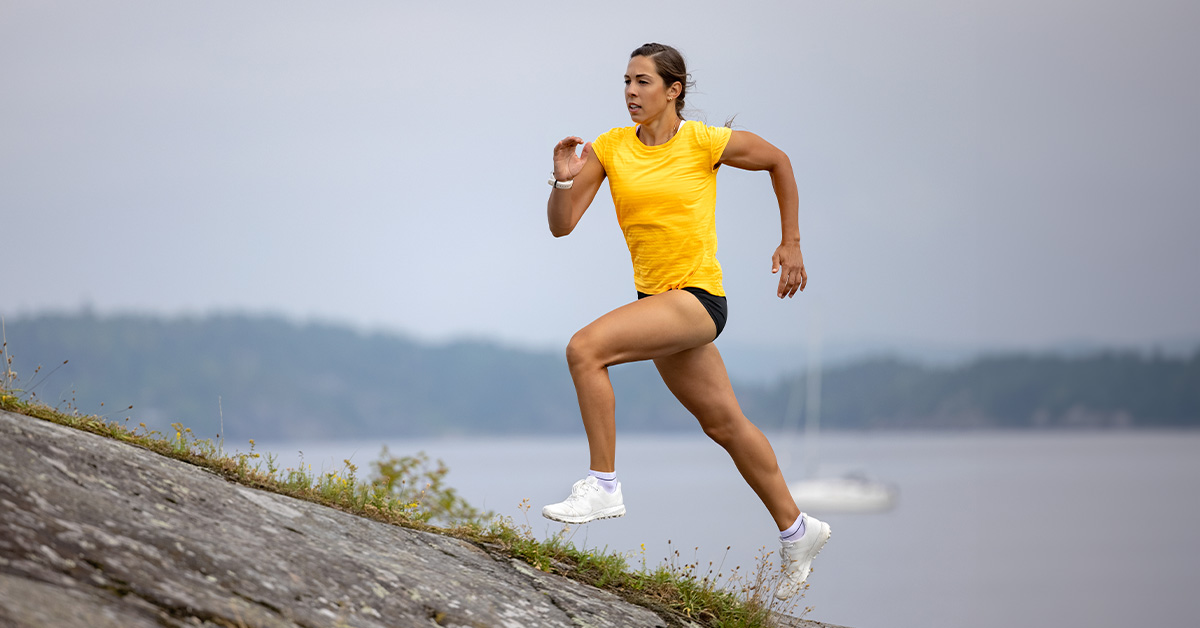
Keep in mind the study was solely on fat loss and didn't consider performance. Keep reading to learn more about performance. And if you want to burn even more fat, click the image below to read the article on high intensity interval training (HIIT).
Energy Levels
On the other hand, we have to mention energy levels for those trying to improve performance. Schabort et al (1999) compared prolonged exercise activity for those who ate breakfast vs. those who skipped breakfast. Everyone cycled at 70% of their VO2 max, which is of moderate intensity. The subjects who ate breakfast endured for 136 minutes while the fasted subjects quit after 109 minutes.
You may not exercise 135 minutes every day, but it does show your energy levels will be higher after a snack. Eating a snack 30-60 minutes before your workout may lead to a better workout. A better workout may lead to building more muscle, improving athletic performance, and burning more fat.
The best thing to do is find a plan that works for you. Keep reading to learn more on muscle preservation. And, if you need help with an exercise and/or a nutrition plan, we can help! Click the image below for more info on personal training.

Muscle Loss
Furthermore, we have to consider muscle loss. If you are overweight or obese, and don't care about losing some muscle along with fat, then fasted cardio may be your ticket to greater weight loss. But, if you're like me, and you are trying to hang on to every ounce of muscle you've worked hard for, then you may want to reconsider your fasted cardio strategy.
For example, Lemon et al. (1980) studied the effects of protein loss during exercise on a fasted state versus a fed state. The fasted subjects burned protein at a rate of 10.3%. This means that since their bodies did not have enough sugar in the bloodstream, it broke down more protein than usual to fuel the workout session. This 10.3% is very similar to what happens when we go long periods without food. We normally only burn 3-5% protein during exercise. Either way, you should eat plenty of protein each day.
Want to learn how much protein you should be eating every day? Click the image below to estimate your protein needs.

The After Burn
What is it? The after burn is the amount of calories you burn up once you have completed your exercise session. These extra calories are used by your body to recover and restore your body back to pre-exercise condition. Interestingly enough, the after burn was higher for those who ate before their workout versus those who fasted. Lee et al. (1999) showed that subjects who consumed a glucose milk solution before exercise burned more fat during the two hours after working out than the subjects who performed fasted cardio.
The harder workouts may have contributed to the extra burn. Plus, eating food may have increased their metabolism to burn even more calories. So it turns out eating a pre-workout snack may have more benefits than previously discussed. Want to find out other ways to boost your metabolism? Click the image below for more tips on boosting your metabolism.

What To Do
Everyone is different, therefore, choosing a workout plan for you makes sense. If you want to preserve muscle mass, then eating breakfast seems to make the most sense. Eating food will stop your body from breaking down anymore muscle plus it'll give you enough energy to get you through a harder workout.
However, if weight loss is your #1 goal, then you can possibly skip breakfast. You may burn up a little muscle and you may run out of energy after an hour, but you will still burn lots of calories and ultimately you will lose weight.
Also, if you want to learn more about exercise science and sports nutrition, click the image below for more info on our classes.

Summary
Although research is limited, there doesn't seem to be enough support to warrant fasted cardio if you're looking to burn fat but maintain or increase muscle mass. Fasted cardio isn't bad for you; but, it's probably not your best option to improve health and fitness. Burning a few more fat calories during your workout may not be enough to counter lower energy levels and increased protein breakdown. But the most important thing is getting to the gym and working out; therefore, if fasted cardio seems to be working for you, then stick with it! Each person should decide what works for them.
Sources:
Horowitz, J. F., et al. “Lipolytic Suppression Following Carbohydrate Ingestion Limits Fat Oxidation during Exercise.” American Journal of Physiology, vol. 273 (4, no. 4,pt.1, Oct. 1997, pp. e768–e775.
Lee, Y. S., et al. “The Effects of Various Intensities and Durations of Exercise with and without Glucose in Milk Ingestion on Postexercise Oxygen Consumption.” The Journal Of Sports Medicine And Physical Fitness, vol. 39, no. 4, Dec. 1999, pp. 341–347.
Lemon, P. W., and J. P. Mullin. “Effect of Initial Muscle Glycogen Levels on Protein Catabolism during Exercise.” Journal Of Applied Physiology: Respiratory, Environmental And Exercise Physiology, vol. 48, no. 4, Apr. 1980, pp. 624–629.
Schabort, E. J., et al. “The Effect of a Preexercise Meal on Time to Fatigue during Prolonged Cycling Exercise.” Medicine And Science In Sports And Exercise, vol. 31, no. 3, Mar. 1999, pp. 464–471.
Schoenfeld, Brad MS, CSCS. Does Cardio After an Overnight Fast Maximize Fat Loss? Strength and Conditioning Journal: February 2011 - Volume 33 - Issue 1 - p 23-25.