Rounded shoulders (often called upper crossed syndrome) are one of the most common posture problems caused by today's desk jobs, smartphones, and long hours of sitting. Fortunately, improving your posture doesn't require complicated exercises. By practicing good posture, strengthening your upper back, and stretching tight chest muscles, you can gradually restore better shoulder alignment and reduce discomfort.

Step 1: Prevention
Rounded shoulders are commonly associated with prolonged forward-leaning activities, such as working at a computer, using a smartphone, or driving. Over time, the muscles in the chest (pectorals) may become tight, and the muscles in the upper back (rhomboids and trapezius) may become weak, leading to this misalignment. So while you are sitting, make sure you sit up straight and don't slouch. Practicing good posture can help keep your chest muscles flexible while encouraging proper shoulder alignment.
Furthermore, another tip for office workers is to get up every hour and move a little. Even standing up and moving for 2-5 minutes every hour can help reduce stiffness and improve posture. If you have time, going for a walk will get your blood flowing, burn a few calories, and may even relieve stress or bolster your immune system. Adding exercise to your daily routine is great medicine for your physical health and your mental health.
Step 2: Strengthen Your Upper Back and Rear Shoulders
Spending hours sitting with rounded shoulders often contributes to weaker upper back muscles over time. Therefore, improving rounded shoulders requires strengthening your upper back and rear shoulder muscles. I would recommend picking 2 to 3 exercises that will strengthen your lats and traps. One exercise you can do to strengthen your mid-back is TRX high rows. If you add low rows, you can also strengthen your lats.
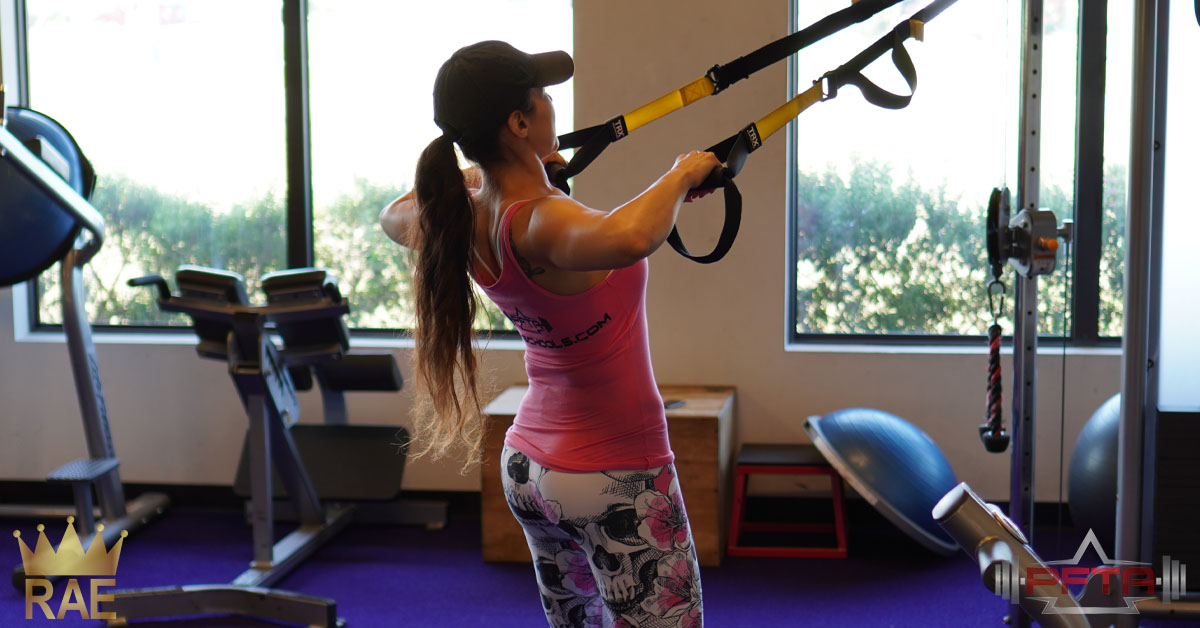
Another great exercise to strengthen your mid-back is reverse pec deck. You can usually find this machine at the gym. An alternative to reverse pec deck is bent laterals. You can perform bent laterals with dumbbells at the gym or at home. After you're done working out your back and rear delts, you can add in the rest of the shoulder. Having strong anterior, middle, and posterior deltoids will also keep your shoulders healthy.

In addition, you can perform seated rows to strengthen your back. If you keep your elbows down, you will target your lats more than your mid/upper back; but, if you keep your upper arms perpendicular to your torso, the primary movers will be mid traps, rhomboids, and the rear deltoids. These movements are very similar to the TRX high rows and low rows previously discussed. If you are new to working out, these exercises are a great start to correcting your rounded shoulders.

On the other hand, an advanced movement for correcting rounded shoulders is deadlifts. However, deadlifts should be performed with proper technique to maximize benefits and reduce the risk of injury. Deadlifts strengthen nearly the entire posterior chain, including the glutes, hamstrings, spinal erectors, lats, and upper back. Developing these muscles helps counteract the forward-rounded posture caused by tight chest muscles and weak upper back muscles.
If you're new to deadlifting, start with a light weight to master the technique before gradually increasing the load. Variations like Romanian deadlifts or trap bar deadlifts can also be effective and might be easier for maintaining proper shoulder alignment. If you need help with deadlifts or any of the other exercises mentioned above, be sure to consult with a PFTA certified personal trainer.

Step 3: Stretch your Chest Muscles
The final step involves stretching your chest muscles. Rounded shoulders are often associated with tight chest muscles and weak upper back muscles. One of the easiest chest stretches involves twisting your torso with your arm anchored against a stationary object. Place your hand on a wall or machine about shoulder height. Then twist your upper torso so you feel the stretch through your shoulder and into your chest (pictured below).
Repeat 2 to 3 times on each side. Consistency is key. Perform these stretches and strengthening exercises consistently—ideally every day, or at least two to three times per week—to see improvement.
Correcting rounded shoulders takes consistency, not perfection. Focus on improving your daily posture, strengthening your upper back, and stretching your chest several times each week. Over time, these small habits can improve posture, reduce discomfort, and help you move more efficiently throughout the day.

These simple habits can help improve rounded shoulders, reduce the effects commonly associated with upper crossed syndrome, and support healthier posture for years to come.