PULL-UPS
Trying to get your first pull up? Or trying to get better at pull-ups? In this article, we go over the muscles and the exercises to help you get started. Keep reading to learn more, or, click on the image below to watch exercises that will help you get better at pull-ups!

Muscles
Performing pull-ups requires a strong back, strong arms, and a strong core. The primary mover for pull-ups is your latissimus dorsi (pictured below), or LATS for short. There are other muscles involved, but if you can get strong lats, you will surely be able to lift your own body weight and perform a pull-up.

Exercises in the Video
In order to get your first pull up, first you need to get a strong back. In the video we show you 3 big time exercises you can do to get a strong back: negative pull-ups, assisted pull-ups, and lat pulldowns. One or all three of these exercise will help you get started.
And if you want to learn more about muscles, exercises, and nutrition, click the image below. We have several class options that will fit your needs.

Negative Pull-ups
If you're able to jump up to a pull-up bar, or, step up to a pull-up bar, then this exercise is the best option to get you ready for your first pull-up. You can also get some help from a personal trainer or a friend. Basically, you need to start with your chin above the bar. Don't worry about pulling yourself up with this exercise. Only focus on lowering yourself in a controlled manner. Negative reps utilizing more weight than you can lift, will get your muscles stronger than almost any exercise.
Negative reps works with almost any exercise. It's very popular with bench press to build a stronger chest. But, if you can't perform negative pull ups, then the next best thing is the assisted pull up machine (pictured below).

Assisted Pull Up Machine
If you have a gym membership, then you've probably seen the assisted pull up machine somewhere on the gym floor. It's pretty easy to get started. Put your knees on the pad and pick a weight that helps you complete 5 to 10 pull ups. In order to get stronger, you should keep the reps below 10. I like 5 pull ups for a stronger back but find a weight that you're comfortable with. And remember, those pull ups should be challenging. If your last rep is pretty easy, then you're not doing your back much good. More instruction in the video above. And if you don't have access to an assisted pull up machine, then surely your gym has a lat pulldown machine. We'll dive into lat pulldowns next.
In the meantime, if you need help losing weight and/or reaching your fitness goals, contact a PFTA certified personal trainer like the one below. We can help with exercise, nutrition, your first pull-up, and more...

Lat Pulldowns
Most gyms, if not all gyms, have the cable lat pulldown machine (pictured below). Lean your torso slightly back to activate more lats and less chest. Pull your elbows straight down. Try to avoid internally rotating your shoulders. Like the assisted pull up above, it's best to pick a weight that will challenge your muscles for 5 to 10 reps. In the video below, we talk about the best pulldown exercise for your back. We break down the hand grips for 4 different exercises. Click the image below to watch the video on the best pulldown exercises for you lats.

Home Equipment
If you don't have a gym membership, then you can still get stronger at home. The first thing I would do is buy a set of dumbbells. With a starter set of dumbbells, you can start improving your strength and your exercise form. Dumbbell rows are a good exercise to strengthen your lats.
Another exercise you can do with dumbbells is bicep curls. Stronger arms will help you with pull-ups because biceps help pull you up. There are many variations to the bicep curl. We cover some of our favorite exercises in the video below. Click the image to watch the exercise demos.

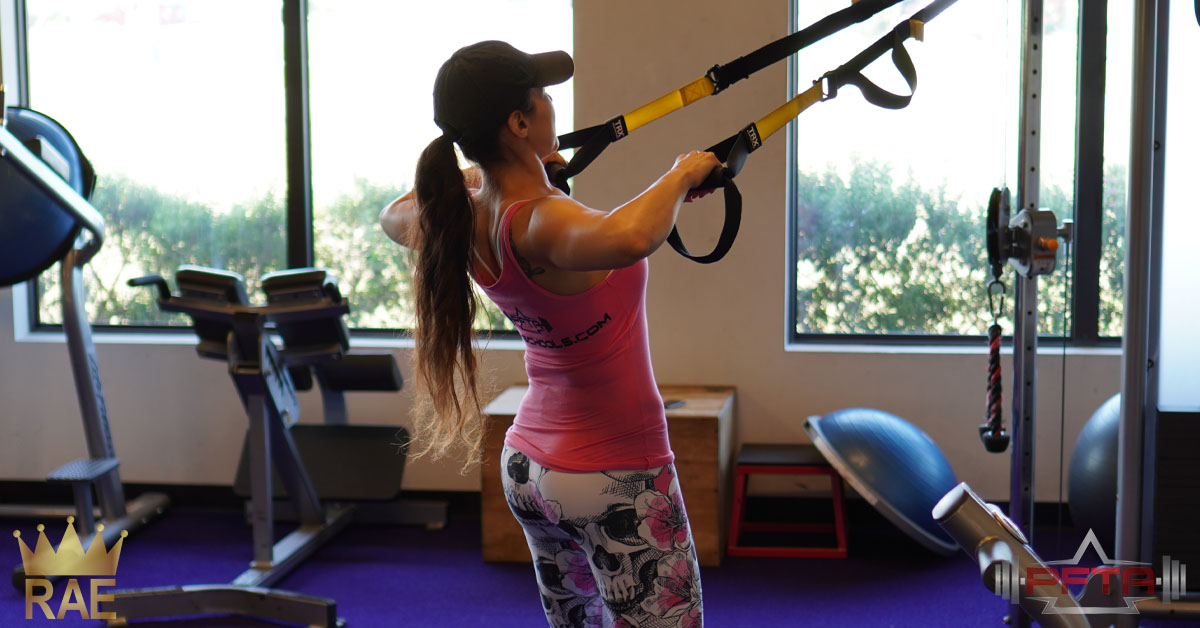
Another piece of equipment you can use at home, or really anywhere, are suspension bands. The most popular brand is TRX, but really you can use any type of suspension training equipment. One of the most popular TRX exercise are rows. You can perform high rows (pictured below) to work your mid traps and rhomboids, or, you can perform low rows to strengthen your lats. Click the image below to learn more about suspension training .
Core Training
Core training is essential for improving pull-ups because a strong core stabilizes your entire body during the movement, preventing swinging and helping you maintain proper form. It allows you to engage more efficiently from the start of the pull to the top, making each rep more controlled and powerful. A solid core also reduces strain on your arms and shoulders, letting you focus on pulling with strength and precision. Normally, when we think of core, we think of six pack abs. Click the image below to read more about creating a stronger core and/or developing those six pack abs!

Summary
If you've never done a pull-up, or if it's been too long since you completed a pull-up, then training for a pull-up is a great exercise goal. Start with strengthening your back, arms, and core. Along the way, you can make things easier on your muscles by losing some of that fat around your core. It's not going to be easy, but it's going to be worth it! Start training today!
If you have questions or comments on this article, or on the personal trainer school, please use the form below. Happy health and happy training!